CivicVault
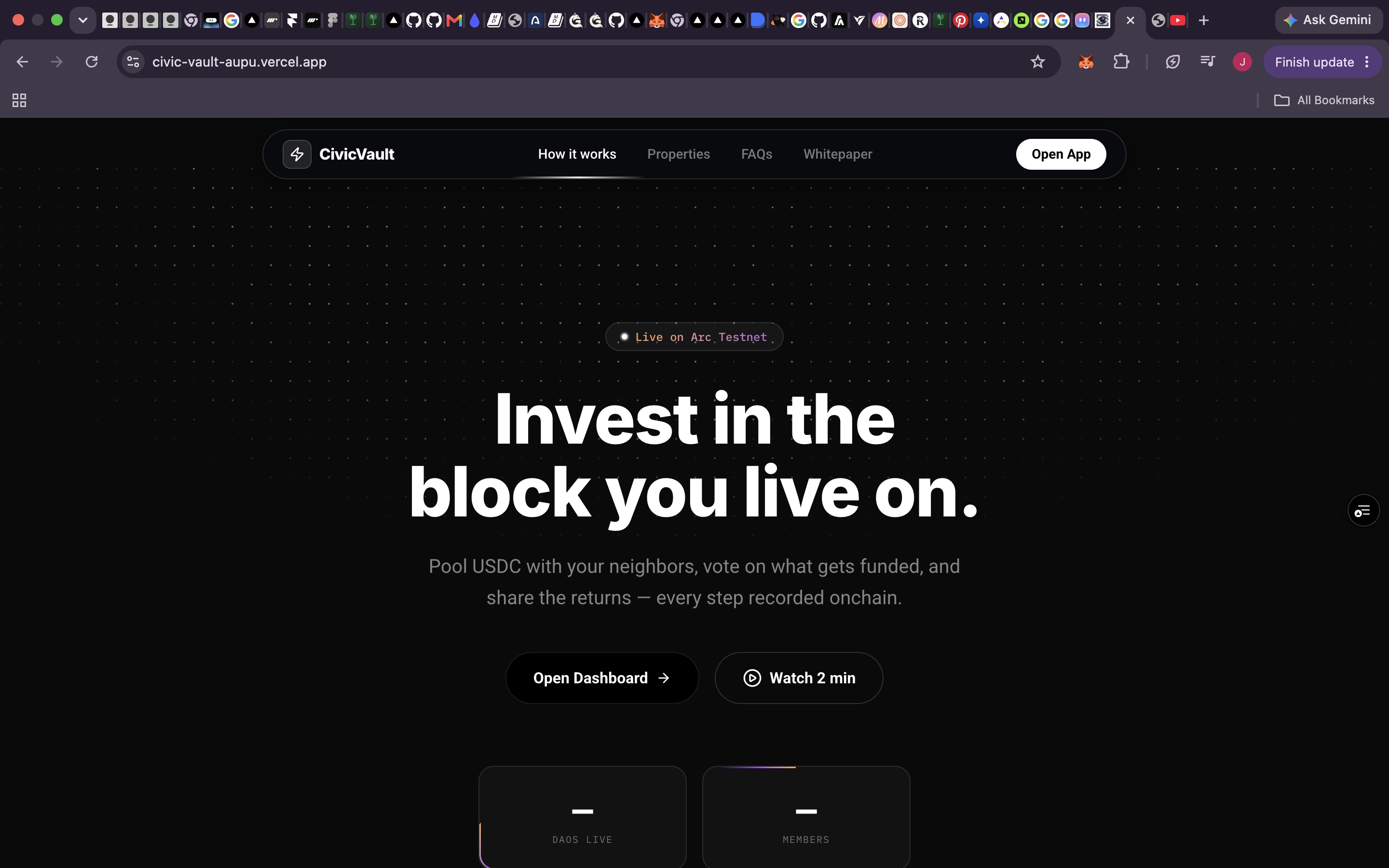
Local communities across Nigeria and the broader African market — neighborhood associations, cooperative savings groups, student unions, PTA committees, and rotating savings groups — lack any neutral, transparent coordination layer for pooling and deploying money together. The result is a pattern that repeats endlessly: a street collects contributions to replace a burnt transformer and the money disappears with whoever held it. A PTA chairman collects school development levies for a classroom block that never breaks ground. A student union collects annual dues with no public record of where the money goes. An ajo group's trusted admin disappears with the cycle funds. Church building projects stall mid-construction because the collection committee cannot account for contributions. These are not edge cases — they are the everyday financial reality of communal life in millions of Nigerian households, and they share one root cause: money pooled by a group of people with no enforceable, transparent record of where it goes. The scale of this problem is enormous. Nigeria alone has tens of millions of people actively participating in informal savings and investment groups, contributing to community infrastructure funds, and paying into shared development levies — all coordinated through WhatsApp and personal bank accounts with zero accountability infrastructure.
讨论
还没有评论,快来分享你的看法吧。